
When the N-Word Stops Being “Free Speech” and Becomes Harassment
- Freedmen Nation
- May 5
- 2 min read

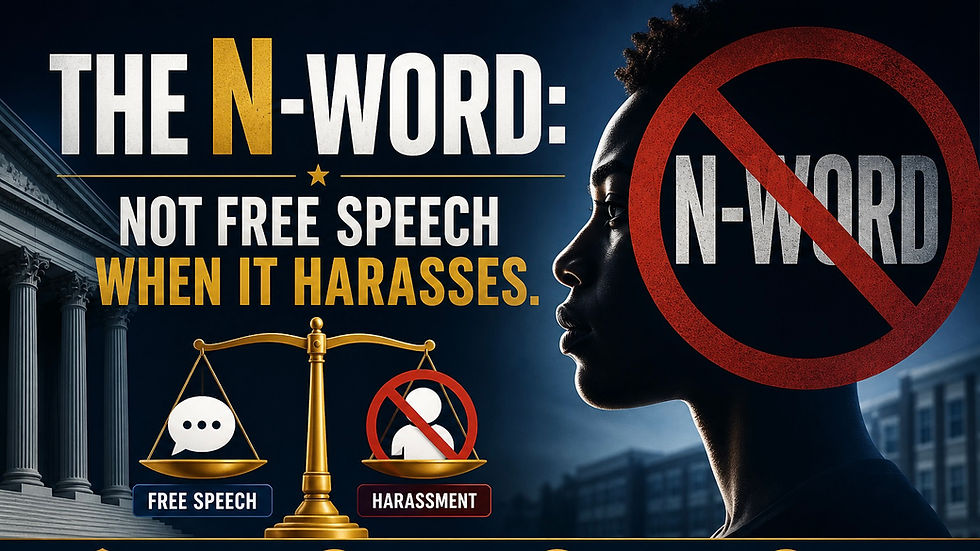
There is a growing misunderstanding about what “free speech” actually protects in the United States. Too often, people believe it gives them the right to say anything they want to anyone, anywhere, without consequence. That is not how the law works.
The First Amendment protects individuals from government punishment for speech. It does not give people a license to harass, threaten, intimidate, or target others without consequences—especially in public spaces, workplaces, schools, or housing environments.
Free Speech vs. Harassment: What’s the Difference?
Free speech protects your ability to express opinions—even offensive ones—without government censorship. But the moment speech is directed at a specific person or group in a way that creates intimidation, hostility, or fear, it begins to cross into harassment.
Using the N-word—especially when directed at someone—can move quickly from “speech” into conduct. Courts and institutions consistently recognize that certain words, when used with intent to target or degrade, are not just ideas—they are actions with impact.
Context Matters
Not every use of a word is treated the same under the law. Context determines everything:
Private conversation vs. targeted confrontation
Academic discussion vs. direct insult
General commentary vs. repeated targeting of an individual
When the N-word is used toward a person, especially in a confrontational or repeated manner, it can be considered:
Verbal harassment
Creation of a hostile environment
Discriminatory conduct (in workplaces, housing, schools)
Evidence of intent in civil rights violations
What the Law Actually Protects
Courts have consistently drawn a line:
You can criticize the government—even harshly
You can hold unpopular opinions
You can speak generally about ideas
But you cannot:
Use speech to threaten violence
Engage in repeated, targeted harassment
Create a hostile environment in regulated spaces
Interfere with someone’s rights through intimidation
Speech that crosses into these areas may still be “speech,” but it is not protected in the same way.
The Reality of Consequences
Even when speech is not criminally prosecuted, it can still carry serious consequences:
Employment termination
Removal from platforms or private property
Civil lawsuits for harassment or discrimination
Institutional discipline
Private entities—employers, schools, businesses—can set rules to protect people from harassment.
Why This Matters
The misuse of “free speech” as a shield for harmful conduct weakens real constitutional protections. The First Amendment was designed to protect civic participation and prevent government overreach—not to justify targeted abuse of individuals.
Words carry weight. When they are used to degrade, intimidate, or isolate someone, they stop being just “speech” and become conduct with legal and social consequences.
Bottom Line
Freedom of speech protects your right to speak without government censorship. It does not protect your right to harass others without accountability.
Understanding that distinction is critical—because once speech becomes targeted harm, the law begins to treat it differently.
Support This Work
If you believe in protecting people from harassment and ensuring that our communities understand the difference between free speech and harmful conduct, support this work.
Your contributions help us continue education, advocacy, and protection efforts on the ground.
Every contribution helps move this work forward.


Comments