
Turning Anonymous N-Word Harassment on X Into a Civil Lawsuit

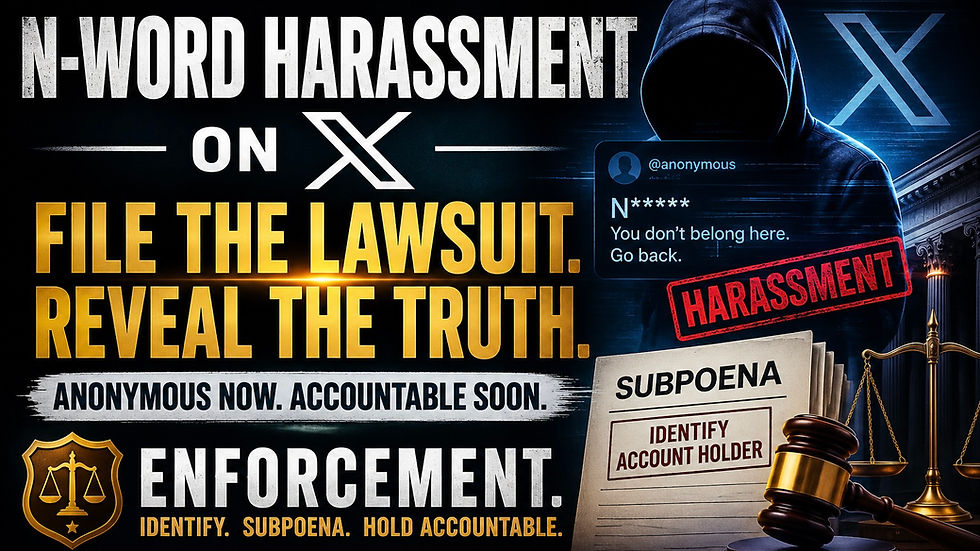
The internet has created a false sense of anonymity. Many people believe they can create fake accounts on platforms like X, target others with racial slurs like the N-word, threaten people, harass families, or encourage violence without consequences.
That is not always true.
In many situations, anonymous online harassment can become the basis for a civil lawsuit, and courts can authorize subpoenas to identify the real person behind the account.
Anonymous Accounts Are Not Automatically Protected
A person using:
A fake username
A burner email
No profile photo
A VPN
A parody account
does not automatically gain immunity from civil liability.
If the account engages in:
Repeated racial harassment
Threats
Defamation
Targeted intimidation
Stalking behavior
Coordinated attacks
Posting private information
Using the N-word in a targeted and abusive manner
then the victim may have grounds to pursue legal action.
Courts in the United States have repeatedly allowed plaintiffs to subpoena platforms and internet providers to uncover the identity behind anonymous accounts when sufficient evidence exists.
The Goal Is Often Identification First
Many people think they must already know the real name of the person before filing suit.
That is incorrect.
In many jurisdictions, plaintiffs can initially file against:
“John Doe”
“Jane Doe”
“Unknown Defendant”
and then seek discovery to identify the individual behind the account.
This is commonly called a:
“John Doe lawsuit”
“Doe defendant action”
“pre-suit discovery action”
Once the case is filed, attorneys can request subpoenas directed toward:
X/Twitter
Email providers
Internet service providers
Phone carriers
Hosting companies
to identify:
IP logs
account recovery emails
linked phone numbers
device identifiers
login history
billing information
Evidence Matters
Before filing anything, evidence preservation is critical.
People should gather:
Full screenshots
Profile URLs
Usernames
Dates and timestamps
Links to posts
Retweets and replies
Threats or repeated messages
Witness statements if applicable
Never rely on screenshots alone if possible.
Save:
direct URLs
archived pages
screen recordings
platform reports
because accounts are often deleted after complaints are made.
Harassment vs. Protected Speech
Not every offensive statement becomes a lawsuit.
Courts generally distinguish between:
protected opinion
offensive speech
unlawful harassment
true threats
intentional infliction of emotional distress
discriminatory targeting
Repeated racial attacks directed at a specific individual can move beyond “free speech” arguments depending on:
severity
repetition
threats
employment targeting
stalking behavior
reputational damage
interference with business or safety
Possible Civil Claims
Depending on the facts and state law, potential claims may include:
Intentional Infliction of Emotional Distress (IIED)
Defamation
Harassment
Civil conspiracy
Stalking
Invasion of privacy
Interference with business relationships
Discriminatory intimidation
Some states also have:
cyber harassment statutes
online intimidation laws
bias intimidation laws
racial threat enhancements
The Subpoena Process
A simplified version of the process often looks like this:
Preserve evidence
File lawsuit against unknown defendant
Request early discovery
Obtain subpoena approval
Serve subpoena on X and related providers
Receive identifying records
Amend lawsuit with real identity
Continue litigation or settlement
This process can take weeks or months depending on:
the court
the platform response
whether the person fights disclosure
the quality of the evidence
Why Many Anonymous Trolls Panic Once Served
Most anonymous online harassers assume:
nobody will pursue them
subpoenas are too expensive
their identity cannot be discovered
But once legal process begins, many accounts:
suddenly disappear
delete posts
deactivate
attempt settlements
stop harassment immediately
Digital anonymity is often weaker than people think.
Important Reality Check
Not every case is financially practical.
Civil litigation can involve:
filing fees
attorney costs
subpoena expenses
investigation costs
time commitments
However, some victims pursue lawsuits for:
accountability
public correction
injunctions
deterrence
emotional harm
reputational repair
AFLF Disclaimer
The American Freedmen Legal Fund (AFLF) is not a law firm and does not provide legal representation or legal advice. AFLF provides legal advocacy support, documentation assistance, strategic guidance, public pressure support, and institutional advocacy assistance for Verified Freedmen and limited advocacy support for Unverified Freedmen depending on the circumstances of the matter.
Individuals considering litigation should consult with a licensed attorney in their jurisdiction regarding their specific claims and legal rights.
Support Our Work
The American Freedmen Legal Fund continues supporting advocacy, documentation, and institutional protection efforts involving harassment, discrimination, retaliation, and civil rights concerns affecting Verified Freedmen communities.
Support our work:


-Which is considered a fedreal/local crime :
N-Word
Anti-Semitism
-Which is considered more defamatory/detrimental towards American birthright citizens
N-word
Anti-Semitism
-Which pays the most in settlement awards towards discrimiantion claims cases.
N-word
Anti-Semitism
-Which threatens/offends or piss you off the most when written graffit or verbally tossed
N-word
Anti-Semitism
*$64,000 Questions, only Freedmen nation can truely answer.